
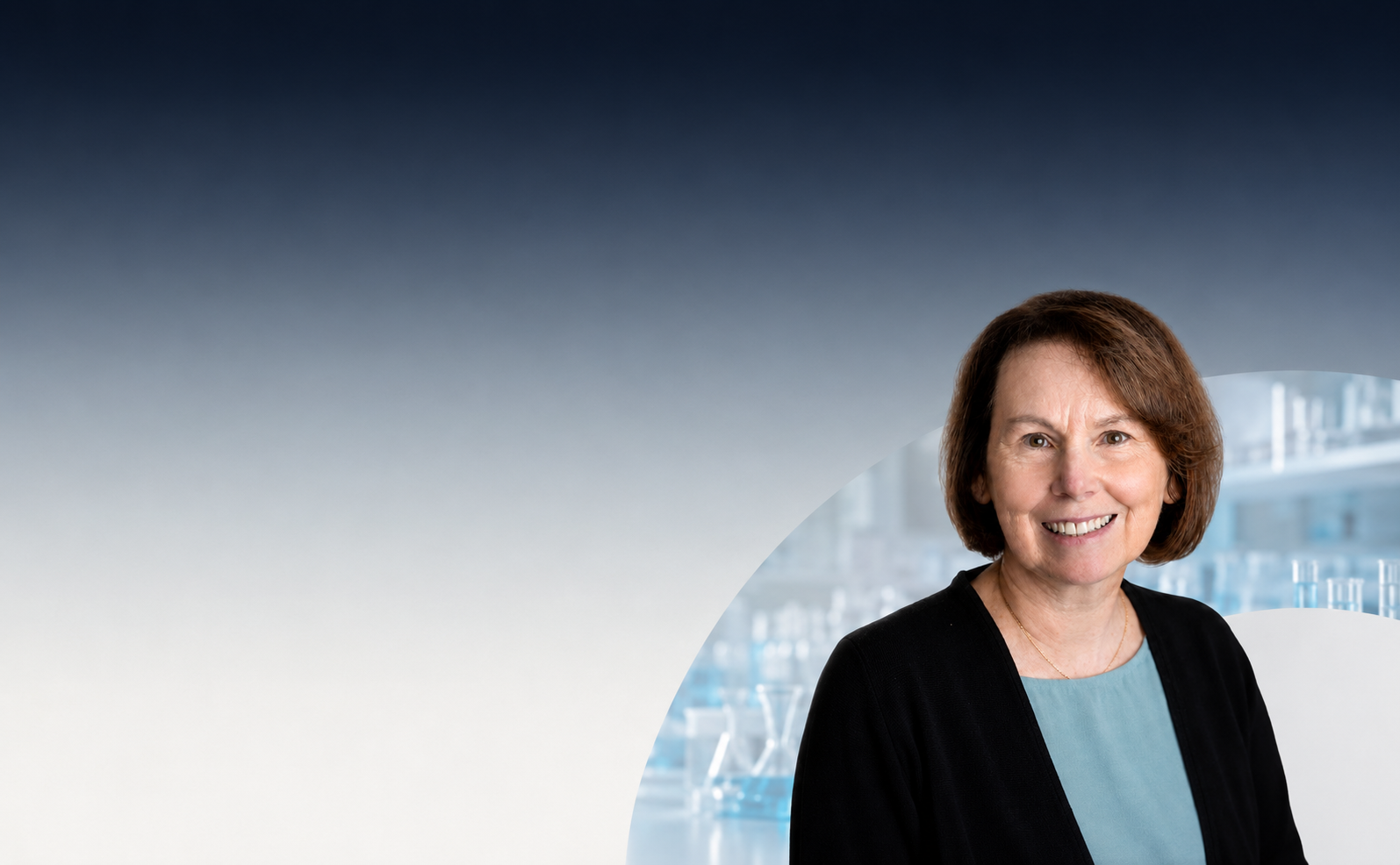
J. Marie Hardwick, PhD
Dr. Hardwick is the David Bodian Professor and Vice Chair for Research at the Johns Hopkins Bloomberg School of Public Health.
Her laboratory investigates how cells decide whether to live or die. By studying neurons, viruses, yeast, and pathogenic fungi, her work reveals how cell-death proteins influence infection, neurodegeneration, cancer, and cellular energy production.
Scientific Journey
From Virology to The biology of life and death
A career shaped by one enduring question: what determines whether a cell survives, adapts, or dies?
A career shaped by one enduring question: what determines whether a cell survives, adapts, or dies?
B.S. Zoology
Western Illinois University
Ph.D. Virology
University
of Kansas
Postdoc Virology
University of Alabama at Birmingham
Discovering That a Protector Can Become a Killer
Marie’s research challenged the idea that cell-death proteins matter only when a cell is dying. Her team demonstrated that these proteins also perform important “day jobs” in healthy cells.
They help regulate neuronal activity, communication between neurons, mitochondrial dynamics, and the production of cellular energy. These discoveries have important implications for understanding neurodegeneration, stroke, and cancer.
Following the science into yeast and fungi
The laboratory eventually extended these questions beyond mammalian cells. Using baker’s yeast, the team developed genome-wide approaches to identify genes that control cell death.
These studies produced unexpected connections to genome evolution and human disease. They revealed how losing one gene can favor a second, compensating mutation and helped uncover cellular defects associated with KCTD7-related epilepsy and neurodegeneration.
Today, the lab also investigates regulated cell death in the pathogenic fungus Cryptococcus neoformans, with the long-term goal of identifying new ways to treat difficult fungal infections.
An Invitation to Future Scientists
Marie’s scientific journey shows that important discoveries often begin with an unexpected result. Her research crosses the boundaries of virology, neuroscience, genetics, cancer biology, and infectious disease while remaining centered on one fundamental question: how do cells balance survival and death?
For students, the lab offers an opportunity to explore big biological questions through molecular biology, genetics, cell biology, and diverse experimental systems—from neurons and viruses to yeast and pathogenic fungi.
Scientific Beginnings
Marie began her scientific training in zoology at Western Illinois University before earning her PhD in virology at the University of Kansas. She then completed postdoctoral training in molecular virology at the University of Alabama in Birmingham.
This background in viruses set the stage for a much broader question: what determines whether an infected cell survives or dies?
What Cell-Death Proteins Do Before Death
At Johns Hopkins, Marie connected virology with the emerging field of programmed cell death. Her laboratory showed that BCL-2, a protein known for protecting cells, could change the outcome of viral infection in the brain.
The lab later discovered something even more unexpected: proteins such as BCL-2 and BCL-xL can switch roles. After being cut by cellular enzymes called caspases, these protective proteins can become powerful promoters of cell death.